EV Charger Installation Cost for Home Charging
Reviewed by Sarah Chen, energy analyst
01What does EV charger installation cost include?
Home charger installation covers the electrical work needed to supply the equipment; buying the charger is a separate expense unless the quote explicitly includes it. Compare complete project scopes before comparing prices.
Ask each installer to identify:
- The charger model and who supplies it.
- The proposed charging output and connection method.
- Circuit wiring, breaker and mounting work.
- Permit applications and inspection arrangements.
- Any panel changes, trenching or construction repairs.
- Equipment setup, testing and installation warranty.
Keep equipment, installation and additional work on separate lines. If an installer supplies the charger, ask for its model and price so you can compare that package with buying the same equipment yourself.
A low advertised installation price is only useful when its scope matches your home. Ask which assumptions would change after a site visit and whether the installer will confirm those changes before work begins.
02What affects Level 2 electric car charger installation cost?
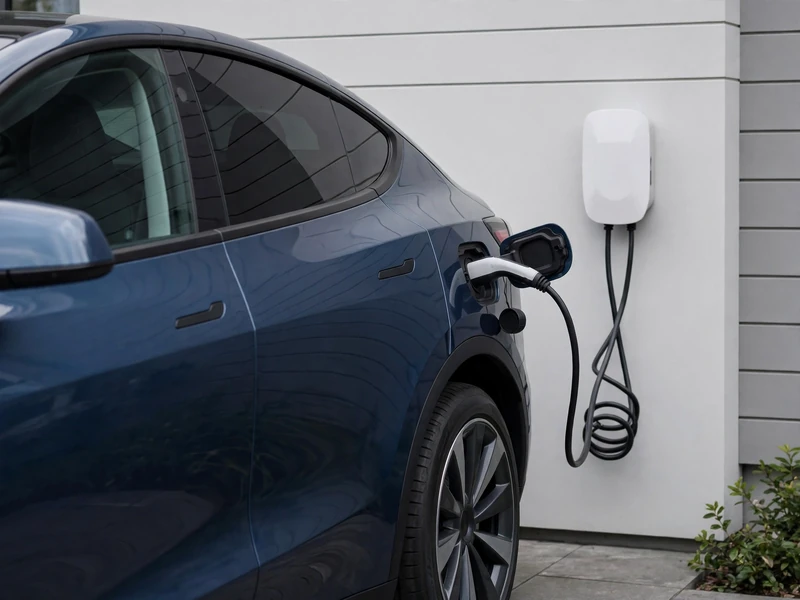
The wiring route and available electrical capacity affect how much work your installation needs. Tesla identifies long wire runs, additional panels, trenching, main panel upgrades, pedestals and concealed cables as additional installation items.
Start with the parking location. Ask the electrician to compare practical charger positions and explain how each changes the wiring route. Check that the cable reaches the vehicle in its usual position without creating an awkward walking route.
For a detached garage or driveway installation, request a description of the proposed route and any ground or surface restoration. Ask who handles that restoration and whether it appears in the electrical quote.
For an indoor installation, decide whether visible conduit is acceptable or whether you want wiring concealed. Have the installer price the requested finish explicitly. This makes it easier to judge whether a higher quote buys necessary electrical work or a different appearance.
Do not accept a panel replacement as an unexplained allowance. Ask what assessment supports it, what equipment will be replaced and whether utility involvement is included.
03Is Level 1 charging enough, or do you need Level 2?
Level 1 charging may cover your daily driving if the vehicle has enough time parked; Level 2 provides faster charging. DOE says some drivers can meet their needs overnight using existing Level 1 equipment and a suitable outlet on a dedicated circuit.
For home charging, Level 1 uses 120 V and Level 2 uses 240 V. Choose around your driving and parking time rather than buying the highest available output.
Before requesting quotes, write down:
- Your vehicle model and its supported home charging rate.
- Your usual daily driving and occasional longer trips.
- When you arrive home and when you leave.
- Whether another vehicle will share charging.
- Whether you already own compatible charging equipment.
Ask the installer to explain how the proposed setup meets those needs. Tesla notes that actual charging speed depends on the vehicle, and its Wall Connector supports lower power settings when capacity is limited.
Keep public charging equipment out of this home budget comparison. DOE and EPA describe DC fast charging as impractical for home installation.
04How much does it cost to install a Tesla home charger?
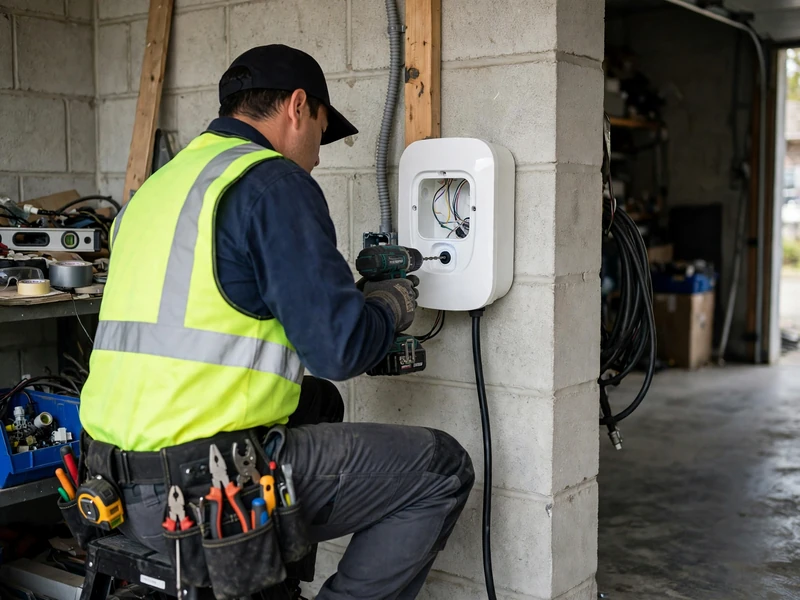
Tesla estimates Wall Connector installation at $750 to $1,500, with equipment purchased separately. Tesla Shop has listed Wall Connector at $585 and Universal Wall Connector at $660, but hardware prices change, so check the current listing.
The Universal model includes an integrated J1772 adapter. Check your vehicle inlet and the exact product configuration before ordering, particularly if the equipment will serve different vehicles.
Ask whether the installer is supplying the unit or installing equipment you purchase. Confirm stock and delivery timing before booking the electrical work.
Treat the installation estimate as a starting point for discussing scope. Request a written total that identifies equipment, electrical work, taxes and any construction work your property requires. That gives you a useful Tesla charger at home cost comparison without assuming every garage has the same wiring needs.
05Do you need a panel upgrade for home charging?
A panel upgrade is not automatically required for a home charger. Have an electrician assess the electrical load and compare charging options before approving a replacement.
ENERGY STAR lists $1,000 to $2,500 as a sample panel upgrade cost. It also distinguishes a panel upgrade from a utility service upgrade, which may involve additional work. Ask your installer which job the proposal includes.
Tesla describes static power management as setting a fixed charging limit and dynamic power management as adjusting charging to available household capacity. Its dynamic system requires a separately purchased and installed approved meter.
Request a comparison of:
- Charging at a lower fixed output.
- Installing compatible load management equipment.
- Replacing the panel or upgrading service.
For each option, ask what charging performance you would get and what work the price includes. Include planned appliances in that conversation. ENERGY STAR advises reviewing future electrical needs with an electrician.
If you are considering broader electrical changes, read our SPAN electrical panel guide. For a planned heating conversion, use the heat pump cost calculator to develop that separate project budget.
06Is a plug in charger cheaper than hardwiring?
A plug in charger is not automatically cheaper because the outlet and circuit may still need installation. Compare both complete options for your home.
ChargePoint recommends hardwiring Home Flex when a suitable matching outlet is not already available. Its installation guidance also makes clear that the permitted configuration depends on the selected charging setting and circuit.
Tell your electrician whether portability matters and whether there is an existing outlet to assess. Ask for confirmation that the equipment, receptacle, circuit and installation location are compatible.
For outdoor charging, DOE specifies equipment rated for outdoor use. Include the installation location in your quote request rather than buying equipment first and assuming the same setup suits every site.
07What rebates or tax credits remain in November 2026?
The federal charger credit is unavailable for property placed in service after June 30, 2026, according to the IRS. A charger installed now should be budgeted without that credit.
For qualifying home equipment placed in service by the deadline, the credit was 30% of eligible cost, capped at $1,000 per item. Eligibility also required a qualifying census tract and other conditions; the IRS directs claimants to Form 8911.
State or utility support may still be available. DOE advises checking those programs, but availability depends on location.
Before buying equipment, ask your utility:
- Is the program accepting applications?
- Does approval need to happen before purchase or installation?
- Is the exact charger model eligible?
- Does support cover equipment, electrical work or both?
- Are a particular tariff, installer or charging schedule required?
- What records must accompany the claim?
Keep a rebate out of your committed budget until you have verified its requirements and your eligibility. Save the applicable terms with your quote and purchase documents.
08How much does it cost to charge an electric car at home?
Home charging cost depends on electricity use and your applicable electricity rate. The installation invoice pays for the equipment and electrical work; it does not represent the ongoing energy bill.
Use this calculation:
Charging electricity cost = electricity supplied to the charger in kWh × applicable price per kWh.
If rates change by time, calculate each charging period at its applicable rate. DOE notes that some utilities offer time of use pricing.
Use charging energy records where available and ask what the displayed energy measurement represents. For a prospective purchase, use the vehicle's published electricity consumption and your planned driving to build an initial budget.
If solar is part of the plan, read our solar and EV charger guide and net metering explanation before assuming how charging affects your bill.
09How do you plan an electric car charging station at home?
Choose a quote that documents the equipment, electrical scope and completed handover. Resolve missing allowances before paying a deposit.
Send installers the same vehicle details, parking location and requested finish. Ask them to distinguish essential work from optional changes and identify what needs a site inspection before pricing becomes firm.
Before accepting, confirm who arranges permits and inspection, who repairs disturbed surfaces and what happens if the proposed route changes. At handover, request the equipment documentation, inspection records where applicable and a demonstration that charging works.
For a wider home energy project, use the existing calculators as separate next steps:
- Use the solar payback calculator when evaluating a solar installation alongside charging.
- Use the solar ROI calculator when comparing the solar project's financial assumptions.
- Use the solar battery calculator if storage is also part of your plan.
Carry the electrician's charger quote as a separate project expense when reviewing those results.