Solar Generator for Home: How to Choose Backup Power
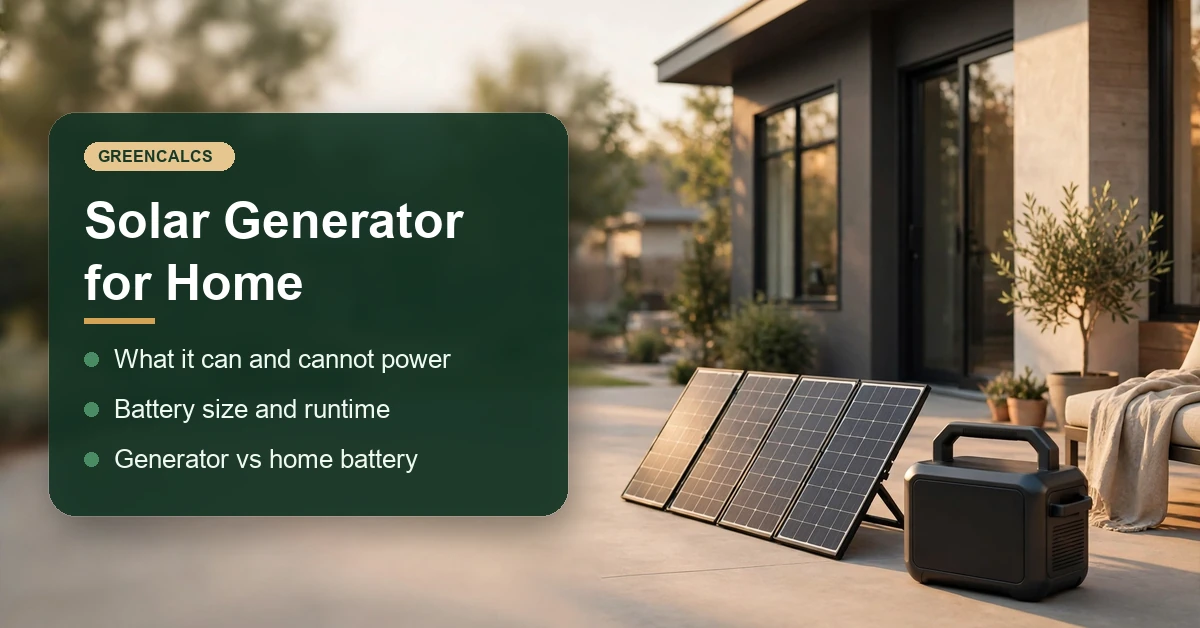
Start with what must stay on, how long it must run and how you will recharge. Those decisions determine whether you need a portable kit or an installed solar and battery system.
Reviewed by Sarah Chen, energy analyst
01What is a solar generator for home use?
A solar generator usually combines a rechargeable battery, an inverter and solar charging capability. Solar panels collect energy, the battery stores it and the inverter supplies electricity to compatible AC appliances.
The battery itself does not generate electricity. A power station charged from a wall outlet can provide backup without solar panels, but it needs another energy source once its stored charge runs out.
Check the package contents before buying. A listing for a power station may exclude panels, while a solar generator bundle may include them. Cables and equipment for connecting household circuits may also be separate.
Portable solar power for home use and permanently installed storage serve different needs. Choose direct appliance connections when portability matters. Consider an installed system when you want selected household circuits supported through an outage. The Department of Energy explains that backup capability depends on the inverter, storage and system configuration.
02What size solar generator do I need for my home?
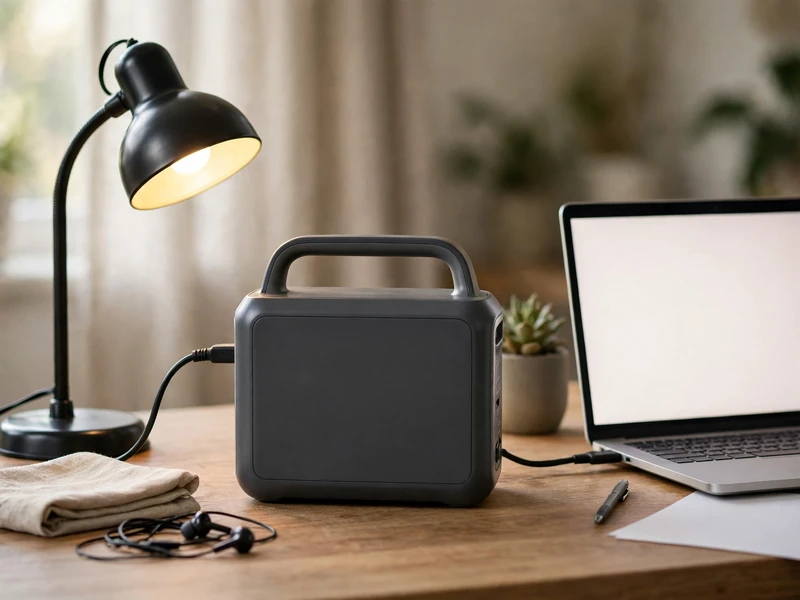
Choose power output to handle the appliances running together, then choose battery capacity to cover their energy use for the outage you want to bridge. Passing the power check does not establish how long the battery will last.
Power output: Watts, shown as W, describe how much power the unit can supply at a moment. Compare continuous output with the combined running demand of your selected appliances. Check individual outlet limits as well.
Starting demand: Refrigerators, pumps and other motor loads may need extra power when starting. Verify the appliance starting requirement against the manufacturer's surge rating and permitted surge duration.
Battery capacity: Watt hours, shown as Wh, and kilowatt hours, shown as kWh, describe stored energy. Larger capacity can extend runtime for the same load, subject to usable capacity and conversion losses.
Build your appliance list using labels, manuals and measurements. Virginia Cooperative Extension recommends measuring consumption where practical and accounting for appliances that cycle.
Use these planning relationships:
- Appliance energy in Wh = running watts × operating hours.
- Combined energy need = sum of the selected appliances' energy use.
- Estimated runtime in hours = usable AC energy in Wh ÷ average combined load in watts.
Use energy available at the outlets for the runtime calculation. Advertised battery capacity may exclude inverter losses, reserve settings and the power station's own consumption. Ask the manufacturer for usable AC energy or documented runtime under a comparable load.
The solar energy glossary explains the units used in equipment listings.
03Can a solar generator run a refrigerator or air conditioner?
A solar generator can run a refrigerator or air conditioner when its output, starting capability, voltage and stored energy meet that appliance's requirements. Compatibility with an appliance does not establish that the battery can support it throughout an outage.
Refrigerators and freezers
Check compressor starting demand separately from running consumption. A refrigerator cycles, so its nameplate wattage alone does not describe its average energy use.
Measure consumption over representative operation when possible. Include other devices sharing the battery, such as lighting and a router. Test the actual refrigerator with the intended power station before relying on the setup during an outage.
Air conditioning
Choose a solar generator for AC by checking the specific air conditioner's electrical requirements. Verify voltage, running demand and compressor starting demand with the equipment manufacturers.
Portable cooling equipment and central systems can require different connections. A large advertised inverter rating does not establish compatibility with a hardwired central system. Ask an installer to identify which cooling equipment can operate, which other loads must be paused and how cooling changes expected runtime.
04What is the best battery generator for home backup?
The best battery generator for home backup is the model that meets your appliance requirements, runtime target and recharge plan. Compare documented capabilities before choosing by brand or advertised maximum power.
Manufacturer specifications provide useful reference points:
- Geneverse HomePower TWO PRO: Geneverse lists 2,419 Wh of capacity, 2,200 W of rated output and 4,400 W of surge output.
- Jackery HomePower 3000: Jackery lists 3,072 Wh of capacity, 3,600 W of continuous output and 7,200 W of surge output.
These figures describe different limits. Capacity supports the energy budget; continuous and surge output support the appliance compatibility checks. Neither specification alone establishes refrigerator runtime or whole home coverage.
For a small solar generator for house essentials, prioritize the actual appliance list, suitable outlets and a manageable carrying weight. For longer outages, examine the supported solar input and available charging equipment.
Also check how backup starts. Ask whether you must reconnect appliances manually, whether the unit supports automatic transfer and what interruption the connected equipment can tolerate. Confirm warranty conditions and service arrangements before ordering.
05How do whole home backup power systems compare with portable units?
Whole home backup systems connect through installed equipment that separates the home from the utility grid during an outage. Portable units primarily support appliances connected to their outlets, although some support compatible transfer equipment.
“Whole home” describes a possible system scope. It does not guarantee that every appliance can run together or that stored energy will last through an extended outage.
Generac PWRcell
Generac PWRcell is an installed home battery system. Generac's PWRcell 2 specification sheet lists configurations with 9, 12, 15 or 18 kWh of usable energy per cabinet.
The selected configuration also affects available power. Ask the installer to identify the battery configuration, supported circuits, inverter and required disconnect equipment. A quotation should state what happens when several large appliances request power together.
Tesla Powerwall
Tesla Powerwall is also installed home storage. Tesla lists Powerwall 3 with 13.5 kWh of nominal battery energy and configurable nominal AC output up to 11.5 kW.
A Powerwall stores electricity supplied by solar or another supported charging source. It does not operate as a fuel burning generator. If you want a battery system and a separate generator, obtain a design confirming how they interact.
For the financial tradeoffs of installed storage, read whether solar battery storage is worth it.
06How much does a solar generator for home backup cost?
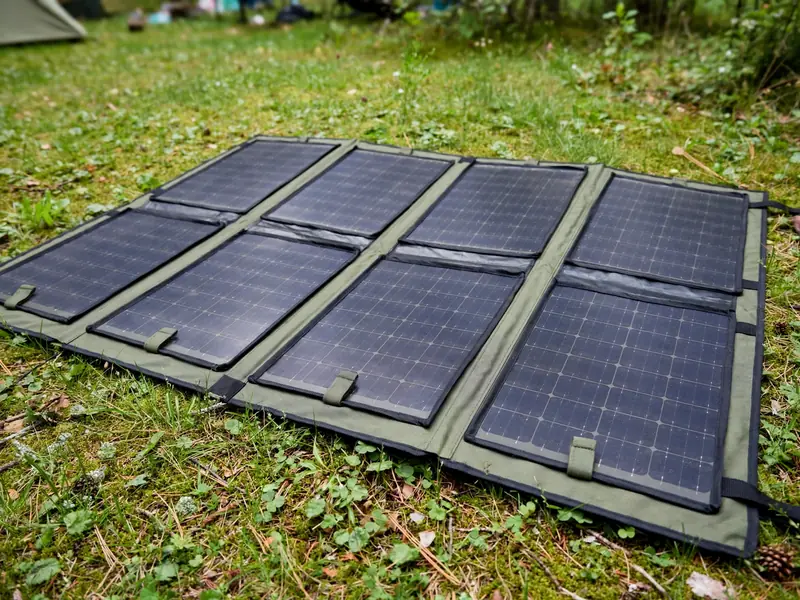
The total depends on the equipment package and whether you are powering appliances directly or installing a system for household circuits. Compare complete equipment lists and installation scopes before comparing prices.
For a portable kit, request an itemized total covering the power station, selected panels, charging cables and any connection accessories. Check whether the advertised price covers the battery alone or the pictured solar package.
For Generac PWRcell costs or another installed system, ask for separate lines covering storage, inverter equipment, grid isolation, circuit work, labor, permits and any solar panels. Require the quotation to name the supported loads and equipment configuration.
Keep backup value separate from electricity bill savings. Buying stored energy capacity does not establish a financial return; savings depend on how the system operates and your electricity tariff.
For new residential equipment installed in 2026, the federal Residential Clean Energy Credit is $0. The IRS states that the credit is unavailable for property placed in service after December 31, 2025. Read the federal solar tax credit explanation and check state solar incentives for applicable local programs.
07Can a solar generator support an off grid home or cabin?
A solar generator can support an off grid cabin when its generation, storage and output meet the cabin's demand. Dependable operation requires a charging plan that accounts for poor weather and seasonal sunlight.
Start with the loads you intend to use during each visit. Include overnight refrigeration, lighting, communications and any pump. Then identify when charging is available and whether the panels can replace the energy consumed.
A larger battery provides more stored energy, but it cannot correct a persistent shortage of solar generation. Panel output varies with location, season, weather and shading. A product's fastest advertised charging time may require more panels or better conditions than your site provides.
Verify that panel voltage, current and connections meet the power station's input requirements. An adapter that fits does not establish electrical compatibility.
For rooftop generation, use the solar panel sizing guide and check roof suitability for solar. Ask an installer to assess sustained off grid operation separately from occasional emergency backup.
08How do solar generators compare with gas generators and homemade systems?
Battery based solar generators supply stored electricity without engine exhaust, while gas generators produce electricity by burning fuel. A homemade solar generator requires you to select and integrate the battery, charging equipment, inverter and protective components.
For extended outages, compare how each option replenishes its energy supply. Solar charging depends on available sunlight. A fuel generator depends on fuel availability and safe operation. Choose around the conditions you expect, including a plan for periods when charging is unavailable.
The Consumer Product Safety Commission warns against operating fuel generators indoors or in partially enclosed spaces. A battery unit's placement must follow its own instructions, including temperature, ventilation and moisture requirements.
Never connect a generator to household wiring by plugging its output into a wall outlet. Have a licensed electrician specify compatible transfer equipment for circuit backup.
For a homemade system, request qualified review of component compatibility, wiring and protection. A collection of individually rated components does not establish that the assembled system is suitable for household connection.
09Which GreenCalcs calculators should you use next?
Use the existing calculators to compare installed solar and storage options after defining your backup needs. Obtain appliance compatibility and outage runtime confirmation from the equipment manufacturer or system designer.
- Use the solar battery calculator as your next step when comparing battery storage options.
- Use the solar payback calculator when considering rooftop solar alongside backup power.
- Use the solar ROI calculator to explore the financial case for a solar project.
- Use the solar financing calculator when comparing ways to fund an installed system.