Solar Panel Efficiency: What It Means for Your Roof
Choose panels by comparing their efficiency, physical dimensions, installed price and expected annual electricity production together. A strong rating helps you use roof space well; the complete system design determines how much electricity reaches your home.
01What does solar panel efficiency actually measure?
Solar panel efficiency is the share of sunlight reaching the panel that becomes electrical power under specified test conditions. It describes conversion performance, while annual energy production measures the electricity your system generates over time.
The U.S. Department of Energy explains that some incoming light is reflected, passes through the cell or becomes heat. Cell design affects how much of the remaining energy becomes usable electricity. DOE efficiency basics.
Keep these terms separate when reviewing proposals:
Panel efficiency:
Sunlight converted into electricity. Use it to compare power production relative to panel area.
Rated power in watts:
Panel output under standard test conditions. Check the capacity of each proposed panel.
System capacity in kilowatts:
Combined rated capacity of the array. Use it to compare the size of complete proposals.
Annual production in kilowatt hours:
Electricity generated over a year. Compare the energy estimate behind projected savings.
The Australian Government’s solar panel guide explains these distinctions. Ask installers to show each metric separately so that an efficiency percentage is not presented as a forecast of bill reduction.
02What is a good solar panel efficiency rating in 2026?
A good efficiency rating lets the proposed system fit your usable roof area at an acceptable total price. The manufacturer examples below provide concrete comparison points, with published module ratings reaching 24.8%.
- REC Alpha Pure RX: The lower power option shown is rated at 450 W with 21.6% module efficiency.
- REC Alpha Pure RX: The highest power option shown is rated at 470 W with 22.6% module efficiency.
- AIKO Neostar 3P+60: The highest power option shown is rated at 550 W with 24.8% module efficiency.
These examples illustrate published specifications. They do not establish a market average or a ranking of every panel available.
Request the datasheet for the exact model in your proposal, including its regional version. Check the module efficiency rather than a headline about the efficiency of an individual solar cell. The quotation should also identify panel dimensions and the proposed roof layout.
Use our guide to comparing solar panel brands for the separate questions of manufacturer selection and product comparisons.
03How is solar panel efficiency calculated?
Panel efficiency equals electrical power output divided by the sunlight power falling on the full panel area, expressed as a percentage. A valid comparison uses the same test conditions for both measurements.
Plain text formula:
Efficiency (%) = panel output in watts ÷ (panel area in square meters × sunlight intensity in watts per square meter) × 100.
Standard test conditions include sunlight intensity of 1,000 W/m² and a cell temperature of 25°C, according to DOE’s photovoltaic performance guidance.
For a worked check, REC lists a panel area of 2.08 m² and rated output of 470 W:
470 ÷ (2.08 × 1,000) × 100 ≈ 22.6%.
That agrees with the manufacturer’s rounded efficiency rating. Use the full module area when checking a datasheet.
Testing your installed system is a different task. Dividing an inverter reading by the panel nameplate rating does not measure conversion efficiency because sunlight intensity, cell temperature and system losses also affect that reading.
04When are higher efficiency solar panels worth paying for?
Higher efficiency is most valuable when roof space limits the system capacity you can install. Paying a premium makes sense when the proposed design produces enough additional useful electricity to justify its additional cost.
Begin with a roof layout rather than a panel brochure. Ask the installer to identify usable roof sections, shaded areas and required access spaces. Then compare how the proposed panel dimensions fit those sections.
The Australian Government confirms that greater efficiency increases rated capacity for panels of the same size. Larger panels also produce more power through greater area, so wattage alone does not reveal which panel uses space more efficiently.
The practical decision depends on your roof:
Limited sunny roof area:
Compare the total system capacity that fits within the proposed layout.
Ample usable space:
Compare installed price and annual production for systems meeting the same energy goal.
Several small roof sections:
Compare panel dimensions and the layout on each section.
Significant shade:
Request a site specific shade assessment and production model before selecting panels.
Our solar roof suitability guide explains the roof assessment. The guide to how many solar panels you need covers system sizing.
05What reduces solar panel output on a real roof?
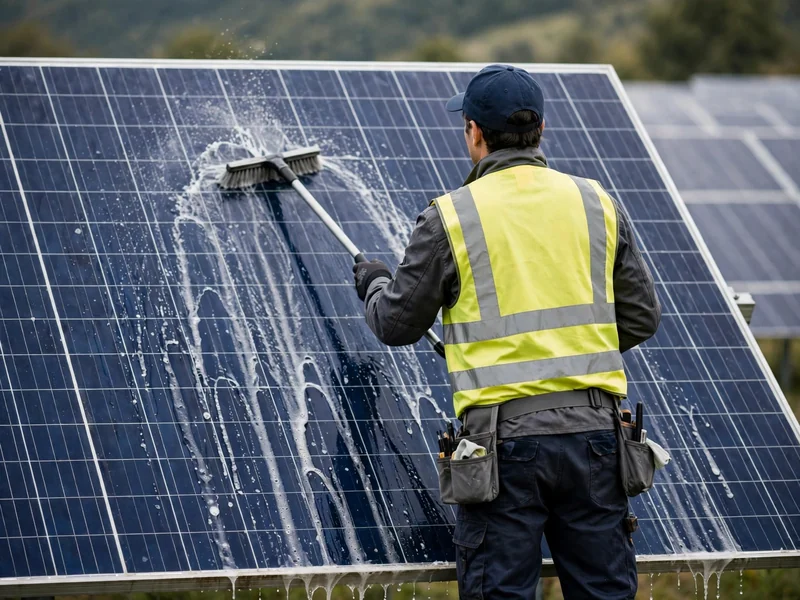
Heat, reduced sunlight, shade, surface dirt and electrical losses can reduce the power delivered by an installed system. These effects must be considered alongside the panel’s published efficiency.
How does temperature affect solar panel efficiency?
Solar cells generally become less efficient as their temperature rises. DOE explains that the reduction in voltage outweighs the small increase in current.
Compare the power temperature coefficient on each datasheet. For a negative coefficient, a value closer to zero indicates a smaller relative power reduction for each degree of warming under otherwise comparable conditions. Ask how the production estimate accounts for your climate and mounting arrangement.
The relevant temperature is the module temperature. The European Commission’s PVGIS technical documentation explains that sunlight heats modules above the surrounding air temperature and that wind can help cool them.
How do shade and roof direction affect output?
Shade reduces the sunlight available to the array. Roof direction and tilt also affect how sunlight reaches the panels throughout the day and year.
DOE’s Homeowner’s Guide to Solar identifies tree cover, roof size, shape and slope as factors in suitability. Ask for a production estimate using your actual roof sections rather than a generic sunny roof.
Review the proposed electrical design separately with our microinverter and string inverter guide.
Does cleaning improve solar panel efficiency?
Cleaning can recover output lost when dirt blocks sunlight. It does not change the panel’s original conversion technology.
Sandia National Laboratories explains that soiling varies with local particles, weather and time since cleaning. Some deposits wash away with precipitation; others require washing. Follow the manufacturer’s cleaning instructions and use production records to judge whether local soiling needs attention. Sandia soiling guidance.
What happens between the panels and your home?
Inverter conversion, wiring, connections and equipment availability affect delivered electricity. PVWatts models several system losses separately from temperature and inverter conversion.
When reviewing a forecast, ask which losses were included and whether any were counted twice. A clear estimate identifies its assumptions about shade, soiling, temperature and equipment performance. PVWatts system loss documentation.
06How does solar panel efficiency change over time?
Solar panels gradually lose output as they age. GreenCalcs uses an annual output decline of about 0.5% for planning, consistent with DOE guidance.
This assumption leaves about 88% of initial output after 25 years. That percentage describes retained output relative to the starting level, rather than the share of sunlight converted into electricity.
Separate the planning assumption from the warranty on a specific panel. Read the guaranteed output schedule and the conditions for making a claim. Ask whether the proposal explains product defects, power performance and labor coverage separately.
Our solar panel warranty comparison covers those contract questions. See solar panel lifespan and return on investment for the broader financial effects of aging.
07How should you compare efficiency and projected savings?
Compare complete proposals using the same roof, electricity use and financial assumptions. Higher efficiency improves space use, but savings depend on the electricity delivered and how your utility values it.
Request a comparison containing:
- The exact panel model and manufacturer datasheet.
- The panel layout and total system capacity.
- Expected annual production and the assumptions behind it.
- Total installed price for the stated equipment and work.
- The treatment of shading, temperature, soiling and aging.
- The electricity bill assumptions used to estimate savings.
Check whether the higher efficiency option adds annual production, reduces the required panel area or simply changes the equipment selection. Those are different outcomes and should be priced clearly.
For the value of surplus electricity, read how solar net metering works. Keep that utility question separate from the panel’s physical efficiency.
Use the solar payback calculator to explore recovery of your upfront cost. Use the solar ROI calculator to compare financial outcomes after you have reviewed the proposal’s production assumptions.