Tesla Powerwall 3 Price: Installed Costs in 2026
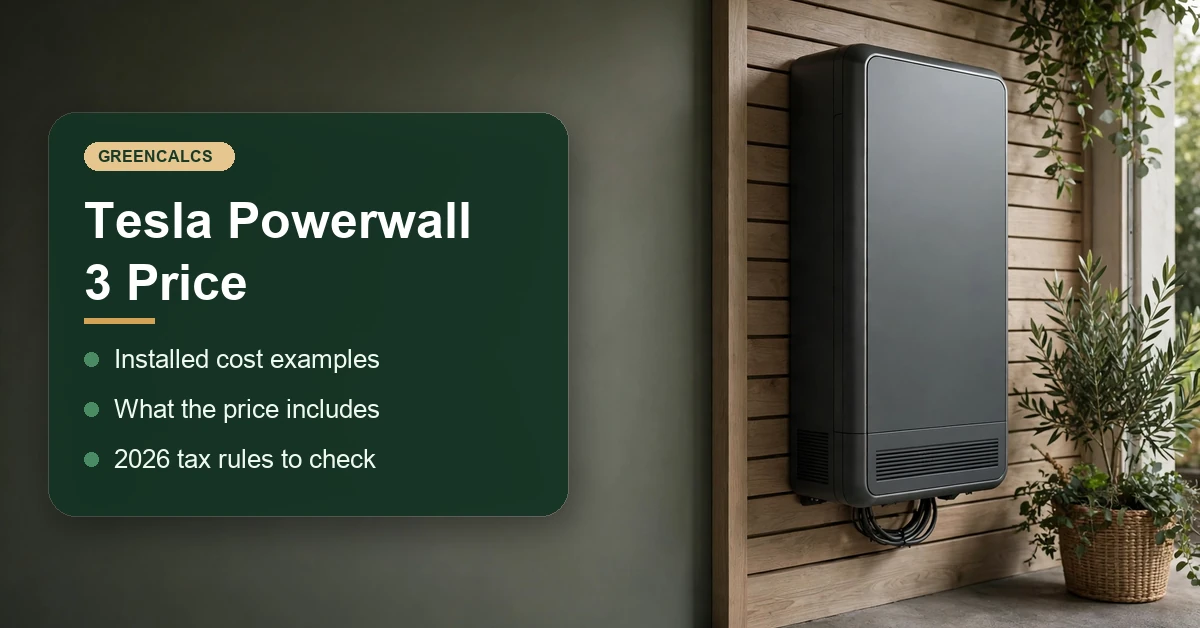
For a battery installed in 2026, budget without the former federal residential clean energy credit. Compare the complete installed cash price, the equipment included and the circuits covered before judging an offer.
Reviewed by Sarah Chen, energy analyst
01What is the Tesla Powerwall 3 price installed in 2026?
Regional installer examples put a single installed Powerwall 3 at $12,000 to $16,000 on NuWatt's pricing pages (other NuWatt pages show different figures), while Coastal Energy advertises a starting installed price of $15,000 in Florida. Your address, electrical work and backup design determine the proposal for your home.
NuWatt’s published pricing includes installation, electrical work and permits. Coastal Energy’s offer includes a Gateway 3 with its single unit starting price. Ask each provider to confirm taxes, exclusions and required upgrades.
These examples do not establish a nationwide average. Tesla’s US ordering page asks for a home address to generate an installation quote, and its support guidance directs buyers to the ordering process for pricing.
Treat any advertised battery hardware price as a starting point for questions. Request a written total covering the complete operating system and installation. A low equipment figure is useful only when you can identify what remains payable.
Start your planning with the solar battery calculator, then compare the result with an installer’s proposed system.
02What should the Powerwall 3 cost include?
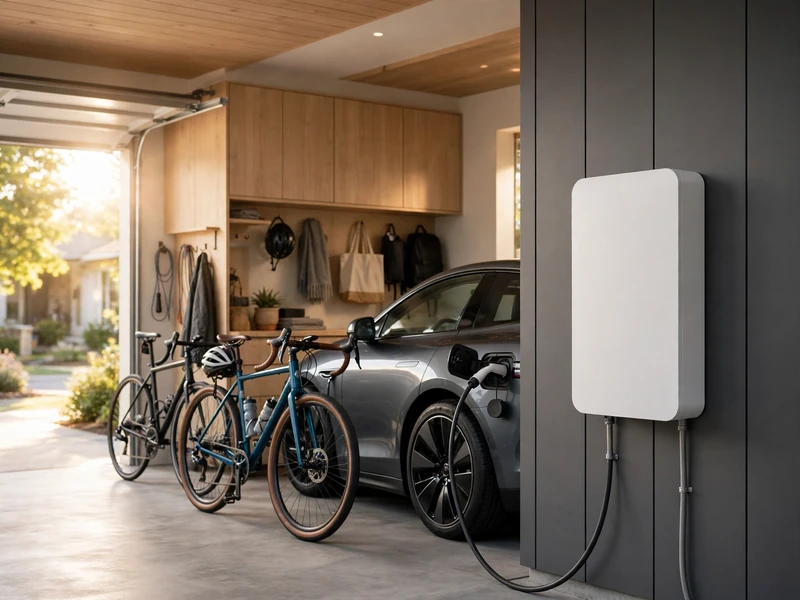
A complete Powerwall proposal should identify the battery, backup control equipment, installation work and any electrical upgrades. Tesla generates an installation quote after you enter your address, and the installer's site assessment determines any electrical upgrades. Ask for a written statement of what the final price includes.
Ask for a breakdown that makes these items easy to compare:
Battery equipment.
Confirm the product model and whether each quoted device is a full Powerwall or an Expansion unit.
Backup control equipment.
Identify the Gateway or Backup Switch in the design and confirm its installation is covered.
Electrical work.
Request the wiring route, connection point and any panel changes in writing.
Permits and utility work.
Ask who handles the applications, inspections and utility coordination, and whether the associated fees are included.
System setup.
Confirm responsibility for commissioning, app access and demonstrating the agreed backup operation.
Taxes and exclusions.
Ask for the cash amount payable before incentives, together with a list of work that could trigger a change.
The important comparison is the same equipment serving the same circuits. An offer covering selected essential circuits has a different scope from an offer designed around broader household backup.
If a proposal changes after the site assessment, ask which design requirement caused the change. Ask what the site assessment reviews, including your electrical system and household usage, before the design is approved.
The solar installer red flags guide provides a next step for reviewing sales claims and contract details.
03What specifications are included with Powerwall 3?
Tesla’s US datasheet lists 13.5 kWh AC of nominal battery energy and configurable nominal AC output up to 11.5 kW. Powerwall 3 also includes an integrated solar inverter.
These specifications answer different buying questions:
- Stored energy in kWh describes the battery’s energy capacity. Tesla’s nominal energy figure is specified under its stated test conditions at the beginning of life.
- Power in kW describes output available to serve appliances at the same time. Ask the installer which output setting the design uses.
- The integrated inverter allows a compatible solar array to connect directly to Powerwall 3. The connection plan matters when comparing new solar installation with an addition to existing solar.
An energy capacity figure alone does not establish which appliances the system can support. Tesla’s system design guidance emphasizes power requirements when selecting backup loads.
What does the warranty cover?
Tesla’s US limited warranty covers defects for 10 years and specifies 70% energy retention at that point. Solar self consumption, time based control and backup qualify for unlimited cycles under the stated terms; other applications have a throughput limit.
Read the connectivity and registration conditions too. Tesla says an unregistered unit or one kept offline for long periods may not receive remote updates, and it will honor the warranty for at least four years in that case. Ask the installer to identify its separate workmanship coverage and who handles service requests.
04How much do additional Powerwalls and Expansion units cost?
Coastal Energy lists starting installed prices of $25,000 for Powerwall 3 with an Expansion unit and $29,000 for two full Powerwall 3 units in Florida. Both listed configurations provide 27 kWh of storage, but their power capabilities differ.
The same installer lists an Expansion unit added to an existing system from $9,500 installed. These are that provider’s published starting prices, subject to a site survey.
Tesla says an Expansion unit adds storage without an inverter. Its design guidance explains that Expansion units extend energy capacity and outage duration without increasing the backup loads the system supports.
That distinction should drive the comparison. If the proposed system supports your appliances but needs more stored energy, request an Expansion option. If the design cannot support the required simultaneous loads, ask whether another full Powerwall is needed.
Request separate proposals for the configurations that meet your requirements. Each should specify the backed up circuits, output setting and expected operation during an outage. Matching storage capacity does not make the designs interchangeable.
05Does a federal tax credit reduce the cost in 2026?
The federal residential clean energy credit provides $0 for a new Powerwall installation completed in 2026. The IRS says Section 25D does not allow expenditures made after December 31, 2025.
The IRS also explains that an expenditure is generally treated as made when the original installation is completed. Paying before the cutoff does not preserve eligibility for equipment whose installation finishes afterward.
Ask the seller to show the cash price before incentives. If a proposal subtracts a federal residential battery credit for a new installation, request a corrected comparison before signing.
Evaluate any manufacturer, state or utility offer separately. Require the current official terms and written confirmation that your address, equipment and installation timing qualify before subtracting it from your budget.
For the cutoff and earlier eligible projects, read the federal solar tax credit guide. Keep tax assumptions separate from the equipment price.
06Can you add Powerwall 3 to existing solar?
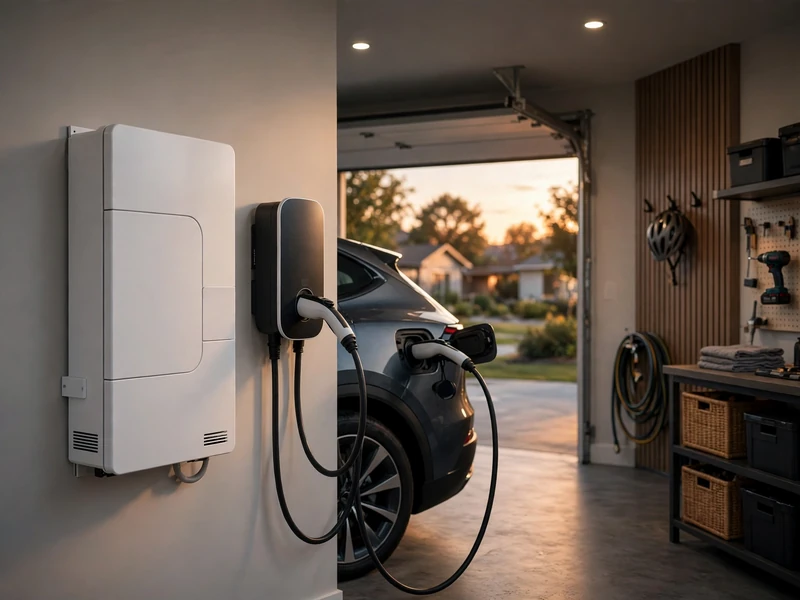
Yes, Tesla says Powerwall 3 can be added to existing solar or installed on its own. The installer must assess the existing equipment and specify how the battery will connect.
Tell the installer which panels, inverter and electrical equipment you already have. Ask whether the design retains the existing inverter, changes the solar connection or requires additional electrical work.
Request a diagram showing the battery connection, backup control equipment and selected circuits. Have the installer explain how the existing solar array and battery will operate together during an outage.
If you are also buying new panels, request comparable solar proposals with and without storage. This makes the added battery expense visible and helps prevent solar generation savings from being counted again as battery savings.
Your export arrangement also matters. Read how solar net metering works before comparing the value of storing electricity with the credit available for exporting it.
07Is the Powerwall 3 price worth paying?
The price is easier to justify when the proposed system meets a backup need or produces documented savings under your electricity tariff. Evaluate those benefits separately so you can see what each contributes to the decision.
Tesla’s Savings mode charges when utility electricity costs are lower and supplies the home when costs are higher. Ask the installer to use your actual tariff and consumption pattern in its savings projection.
Also review the backup reserve assumption. Tesla's app lets you set a Backup Reserve, and energy held for outages is not available for routine bill savings. Ask the installer what reserve level the projection assumes.
A useful financial comparison should show:
- The installed cash price and confirmed incentives.
- The electricity tariff used in the projection.
- The backup reserve and household consumption assumptions.
- The treatment of charging losses and solar export credits.
- The additional savings attributable to storage when solar is included.
For an existing solar system, compare the bill with solar alone against the bill with solar and storage. For a new project, request the same comparison using the same solar design.
The broader guide to whether solar battery storage is worth it covers that decision. Keep this page’s price references as context for reviewing a Powerwall proposal.
08Which calculators should you use before accepting a quote?
Use the battery calculator for initial storage planning and the relevant solar calculators when your proposal also includes panels or financing. Apply the same project price and assumptions when comparing options.
For a new solar project, the solar payback calculator and solar ROI calculator provide starting points for assessing the solar investment. Keep the installer’s additional battery cost and projected battery savings visible in your comparison.
If you plan to borrow, use the solar loan calculator to explore borrowing costs. The solar financing calculator is another next step when reviewing payment options for a combined project.
Request both the cash price and the total financed amount. Compare fees, payment terms and the total repayment alongside the equipment scope. A monthly payment alone does not show the full purchase cost.
Before accepting a proposal, confirm that its price, backup design, equipment list and incentive assumptions agree. Resolve differences in writing so the contract describes the system you intend to buy.