Plug In Solar Panels and Balcony Solar in 2026
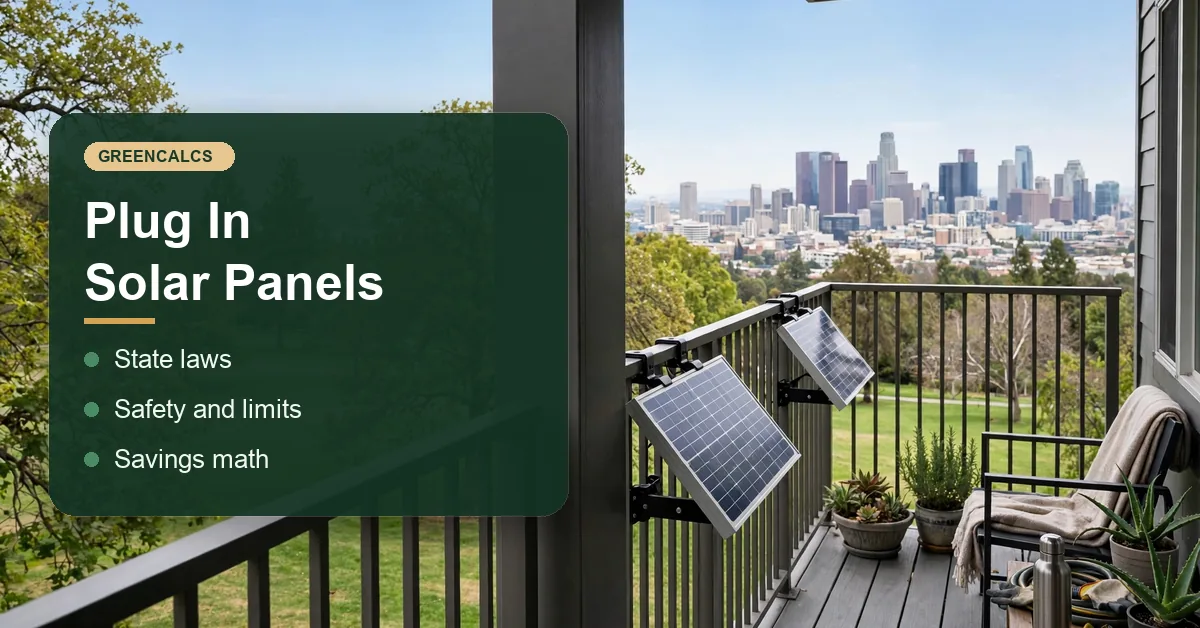
Plug in solar panels, also called balcony solar or plug and play solar panels, use panels and a microinverter to send electricity through a standard 120 volt outlet. Kits commonly fall between 400 and 1,200 watts, but laws set different limits and conditions. Check your state law, utility requirements, equipment and outlet before connecting one.
On this page
- What are plug in solar panels and how do they work?
- Is plug in solar legal in the United States?
- What if your state has no confirmed plug in solar law?
- What should you check before connecting a kit?
- How much can balcony solar save?
- Can renters use plug in solar panels?
- What do people often get wrong about plug in solar?
- Next steps
- Frequently asked questions
What are plug in solar panels and how do they work?
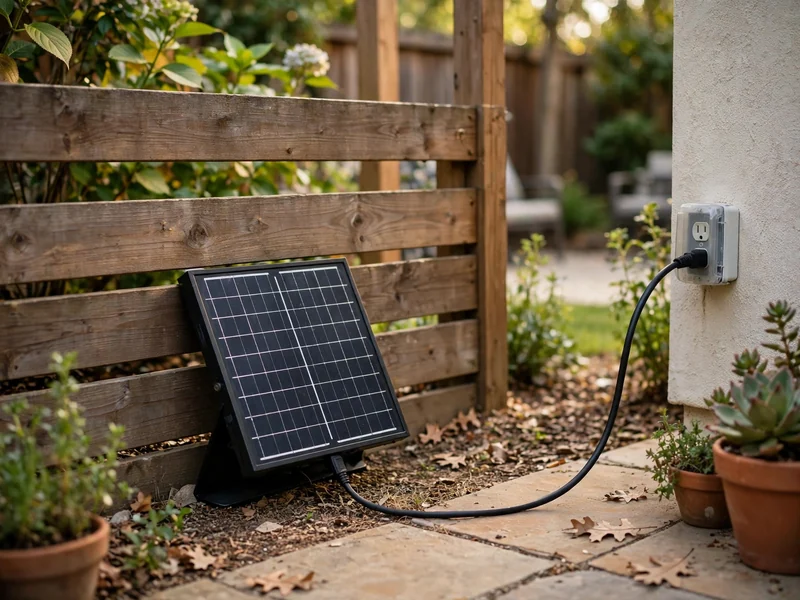
Plug in solar panels are small photovoltaic systems designed to connect to a building’s wiring through an outlet. They can offset some electricity your home uses while the panels are generating. A basic kit may include panels, a microinverter, a cord and mounting hardware.
The panels make direct current, or DC. The microinverter changes that into alternating current, or AC, which household wiring and appliances use. When the system is generating, electricity can serve appliances using power at that time. The setup does not automatically store unused electricity for later. For backup power, you need suitable storage and equipment.
Pay attention to two different ratings. Panel capacity is commonly listed in watts DC, while inverter output is listed in watts AC. A state law may limit one of these ratings, so compare the specific figure named by law with the kit’s specifications. The often discussed 1200 watt limit is not a nationwide rule.
A plug in setup differs from rooftop solar in size and connection method. If you are comparing larger systems, this guide to how many solar panels a home may need explains the sizing question for a different type of installation. Before counting electricity sent to the grid as savings, learn how solar net metering credits work.
Germany provides useful background: its regulator describes balcony systems that connect through a household outlet and sets rules for equipment and power. Those rules do not apply in the United States, where state law and local requirements determine what you may connect. Germany’s Federal Network Agency explains balcony solar systems.
Is plug in solar legal in the United States?
Plug in solar is allowed under dedicated laws in some states, subject to system limits and safety conditions. In other places, utility interconnection rules and local electrical requirements may apply. A bill can also be signed but take effect later, so check its effective date before relying on it.
The table summarizes enacted state laws confirmed for this guide as of November 14, 2026. A wattage limit may refer to inverter output or power sent to the grid. Read the law and confirm your utility’s current process before installation.
<h3>Which states have plug in solar laws?</h3>
| State and law | Limit and effective date | Utility notice or approval |
|---|---|---|
| Utah, HB 340 | Up to 1,200 watts. Effective May 7, 2025. | No utility approval, interconnection agreement or fee for a qualifying system. It must stop energizing building wiring during an outage. Utah Code section 54 15 601 |
| Maine, LD 1730, Chapter 644 | Up to 1,200 watts. Effective July 29, 2026. | Above 420 watts, use a licensed electrician and dedicated circuit, then notify the utility within 30 days. Maine Chapter 644 |
| Maryland, HB 1532 | One system per meter, up to 1,200 watts. Effective July 1, 2026. | No advance utility approval is required, but customers must notify the utility before installation and share safety and capacity details. The customer pays for a locking disconnect switch if the system needs one. Enrolled Maryland bill |
| Virginia, HB 395, Chapter 1052 | Up to 1,200 watts. Provisions take effect January 1, 2027. | Notify the utility before installation. A tenant must notify the landlord at least seven days before installation. Virginia enacted bill |
| Colorado, HB 26 1007 | Up to 1,920 watts to the grid. One device per outlet at an address. Effective August 12, 2026. | No prior utility approval. A utility may require notice of the device and its size. Colorado enrolled bill |
| Vermont, S.202, Act 149 | Up to 1,200 watts combined inverter capacity per meter. Effective July 1, 2026. | A smart meter is required. No utility approval or interconnection agreement is required for a qualifying device. Vermont Act 149 |
| Connecticut, HB 5340, Public Act 26 127 | Up to 1,200 watts and one device per meter. Effective October 1, 2026. | No prior approval or interconnection agreement for a qualifying system. Excess generation may be billed as usage unless the meter allows net metering. Connecticut Public Act 26 127 |
| New Hampshire, SB 540 | One system per meter, up to 1,200 watts AC. Most provisions take effect January 1, 2027. | No prior approval, interconnection review or related fee for a qualifying system. A utility may create an optional post installation notice process. Building code and certification conditions apply. New Hampshire adopted bill |
| New Jersey, S 2368, P.L. 2026, c.82 | Up to 1,200 watts. Effective March 1, 2027. | The law exempts qualifying systems from certain interconnection requirements. A separate utility notice rule was not confirmed in the official text reviewed. New Jersey bill status |
| California, SB 868 | Up to 1,200 watts combined AC output per dwelling. Effective January 1, 2027. | The bill creates an interconnection exemption for qualifying systems. The utility notice process was unavailable in the official material reviewed. California bill status |
New York’s S 8512C passed the Senate, but the status page reviewed lists it as active rather than enacted. A proposed bill does not change current utility obligations. Check New York bill status.
What if your state has no confirmed plug in solar law?
Do not assume plug in solar is automatically allowed or categorically illegal when your state has no confirmed dedicated law. Ask your utility whether its interconnection rules cover the specific device, then check local electrical and building requirements.
When contacting the utility, describe the panel rating, inverter output, equipment certification and connection method. Ask whether you need an application, notice, inspection or other approval. Keep the utility’s answer with the product documentation. The answer may depend on whether the system can send electricity through the meter.
A state law from somewhere else does not grant permission where you live. Larger home systems have separate permitting and interconnection requirements. If you are considering a larger do it yourself installation, review this guide to solar installation laws.
What should you check before connecting a kit?
Check the applicable law, the kit’s certification, your outlet circuit and the mounting location before connecting plug in solar. An exemption from utility approval does not make every product or installation safe.
Use this checklist before buying:
- Match the legal limit to the correct ratingFind out whether your state measures panel capacity, inverter output or power sent to the grid. Do not treat the 1200 watt limit as a national allowance.
- Check the listing or certificationLook for the standard required by your state. UL 3700 is an outline for interactive plug in photovoltaic equipment and systems. UL 1741 covers inverters, converters and interconnection equipment. Laws vary, so neither standard is a universal requirement. Review the UL 3700 outline and the UL 1741 scope.
- Confirm outage protectionAnti islanding prevents a grid connected system from energizing building wiring during an outage. Several state laws require this protection. Check the applicable law and the kit’s certification.
- Check the circuitFollow the manufacturer’s instructions and local requirements. A plug that fits an outlet does not prove the circuit is suitable. Maine, for example, requires a dedicated circuit for systems above its lower output tier.
- Secure the panelsUse mounting equipment intended for the panel and location. Consider wind exposure, structural strength and the risk of a panel falling from a balcony or walkway.
- Check building and lease rulesFire, building, condominium, homeowners association and landlord requirements may still matter. The solar glossary defines terms such as inverter output, AC and DC. For help comparing equipment, see this microinverter and string inverter guide.
The National Electrical Code may also apply. UL’s description of UL 3700 notes that plug in equipment is intended for circuits suited to bidirectional current flow and installation under applicable electrical code requirements. A product label alone does not confirm that the outlet, wiring or mounting location meets local rules.
How much can balcony solar save?
Balcony solar savings depend on annual production, how much electricity your home uses while the panels generate, and your electricity price. Without location and mounting assumptions, a single savings or payback number would be misleading.
Use this formula:
Annual bill reduction = annual solar production in kWh × share used in the home × electricity price per kWh
The share used in the home is called self consumption. Electricity sent to the grid may not earn a credit, so count it as savings only if your utility’s rules provide compensation.
For a location estimate, NLR’s PVWatts V8 estimates production from system and location inputs, including tilt and losses. The latest annual EIA state price table reviewed has 2025 data, released October 21, 2026. Its state residential price figures were not available in the material retrieved for this guide, so use the price on your own bill rather than substituting an unverified state average. See PVWatts V8 documentation and the EIA state electricity price table.
Here is how to estimate the value of an 800 watt kit:
- Convert the panel rating to kilowatts: 800 watts divided by 1,000 equals 0.8 kilowatts.
- Enter your location and system details in PVWatts. Record its annual production in kilowatt hours. Saved PVWatts outputs for sample cities were unavailable in the research reviewed.
- Estimate the share of that production your home uses while the panels are generating. A household specific share was also unavailable.
- Multiply the usable kilowatt hours by your electricity price. The dollar result is unavailable until you know production, self consumption and your rate.
- Divide the full kit and installation cost by the estimated annual bill reduction to calculate simple payback.
A July 2026 market report put typical 400 to 800 watt kit prices at about $500 to $1,500. This is a dated price snapshot, not a quote or guaranteed current price. Axios reported the kit range. Check whether a price includes mounting hardware, shipping and any electrical work required where you live.
Sun exposure and timing affect the estimate. Shade or an unfavorable orientation can reduce production. If your home uses little electricity during sunny hours, more of the generation may go unused. Before choosing a kit, compare likely production with your daytime use and utility rules. If you are also comparing a rooftop system, see this solar panel cost guide and use the solar payback calculator for a larger installation.
Can renters use plug in solar panels?
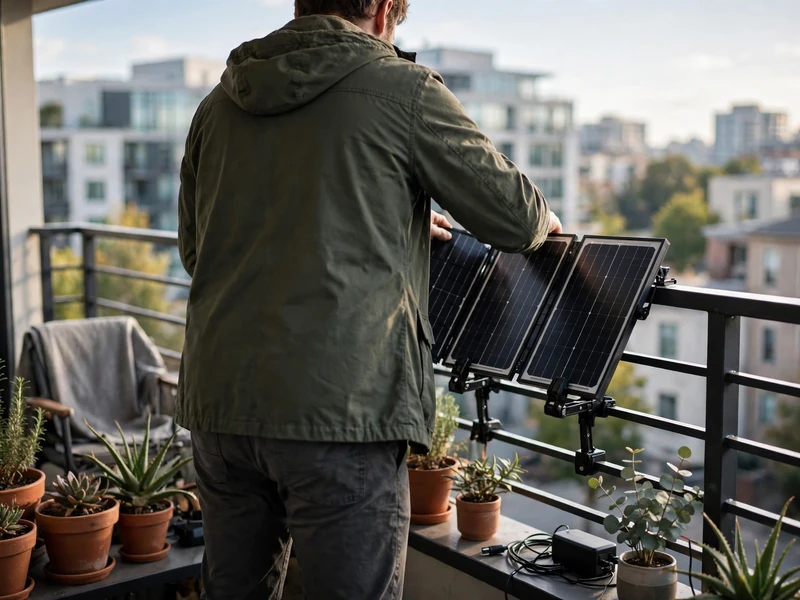
Renters may be able to use plug in solar when the state law, lease, utility rules and mounting conditions allow it. Portability does not remove notice requirements or building rules.
Check the state table for tenant and landlord requirements. Virginia’s provisions require a tenant to notify the landlord at least seven days before installation when they take effect. Other states may set different conditions or say nothing specific about landlord notice. Do not treat one state’s renter protections as a national rule.
Before buying, ask the property manager about the mounting location, wind safety, exterior appearance and any electrical work. Get written instructions if your lease or building rules require them. If you live in a condominium or HOA community, review the governing documents and applicable law. This guide to solar in HOA communities can help you identify questions to ask.
Think about moving the system too. Confirm that the mount can be removed without damage, and keep the instructions, certification and utility records. A shaded balcony may produce less than an open location with stronger sun exposure. If you want a portable option that stores energy, compare it with a solar generator for home use.
What do people often get wrong about plug in solar?
A wattage cap or an exemption from utility approval does not mean you can connect any kit to any outlet. A law may still require certification, outage protection, notice or code compliance.
Keep these distinctions in mind:
Panel watts and inverter watts are different
Compare the measurement named in your state law with the matching rating on the product.
A standard outlet does not establish permission
You may still need a listed system, a suitable circuit, utility notice or other approval.
A grid connected kit is not automatically backup power
A system without suitable batteries and transfer equipment may shut down during an outage for safety.
Exported power may not reduce your bill
Some laws exclude these systems from net metering. Connecticut’s law also warns that excess output may be billed as usage unless the meter allows net metering.
A low price does not establish quick payback
Production, daytime use and utility compensation all affect savings.
Next steps
Start by checking your state law and utility process. Then compare the kit’s output rating and certification with the legal requirements, confirm your outlet and mounting location, and estimate production for your specific site. If you are looking for plug in solar for renters, also check the lease and building rules before choosing a mounting system.
For a larger installation, compare Utah solar incentives or Maryland solar incentives with your local options. To understand how solar conditions differ by location, read the guide to states for solar. For the evidence behind our articles, browse the solar source library and read how GreenCalcs calculates estimates.