How many solar panels do I need calculator: panels, size and roof area
This how many solar panels do I need calculator turns your electricity use and location into three numbers: how many panels to install, the system size in kilowatts, and the roof area the array needs. Enter your monthly kWh from a recent bill and your state, and the tool divides your yearly use by what one kilowatt of panels produces where you live, then by the wattage of one panel, and rounds up. A home using 875 kWh a month in Atlanta needs 18 panels of 430 watts, a 7.74 kW system covering about 387 square feet of roof.
Count your solar panels
On this page
- How many solar panels do I need calculator: how it works
- The formula behind the count
- Solar panel calculator grid: panels by monthly usage and city
- How many solar panels to power a house
- Three worked examples
- Panel wattage changes the count
- Roof space: what the panels need
- What your panel count costs
- Adding a battery, an EV or a heat pump
- Accuracy and limits of the estimate
- Frequently asked questions
How many solar panels do I need calculator: how it works
- Enter your monthly electricity useUse the kWh figure on your bill. If your use swings between summer and winter, add up the last 12 bills and divide by 12, or enter the yearly total directly.
- Choose your stateThe tool loads how many kWh one kW of panels produces there in a year, from NREL PVWatts runs, along with your state's peak sun hours.
- Set your offsetThe default is 100 percent of your use. Lower it if you want a smaller system that covers part of your bill.
- Check the panel wattageThe default is 430 watts, the middle of the 405 to 475 watt range on current home panel datasheets. Change it if a quote names a specific panel.
The result shows the panel count, the system size, the roof area at 21.5 square feet per panel, and the expected yearly production. The formula prints under the result so you can check the arithmetic by hand. If you want the background on sizing before you run numbers, our guide on how many solar panels you need walks through the reasoning step by step.
The formula behind the count
The calculator uses three steps, all shown on screen.
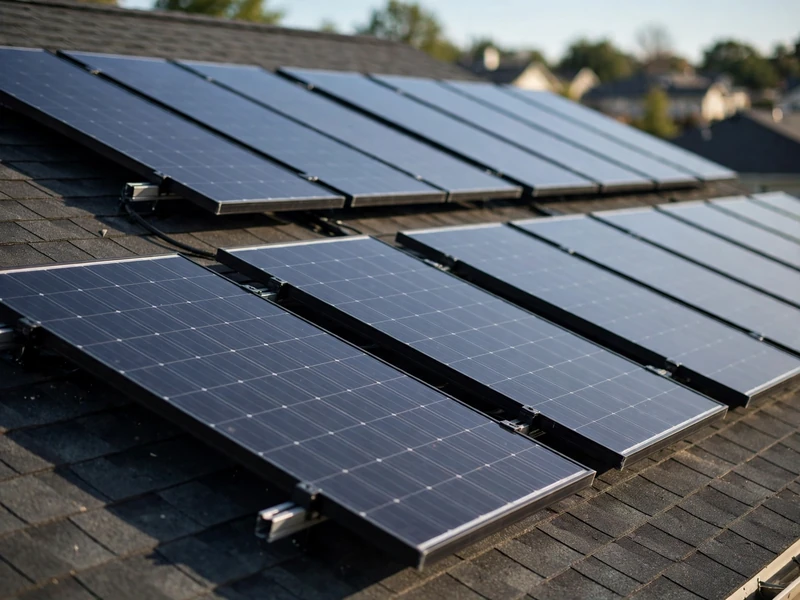
Divide your yearly use by your local production per kW. Atlanta panels make about 1,402 kWh per kW per year, so 10,500 kWh divided by 1,402 gives 7.49 kW.
Divide the system size by the size of one panel in kW. At 430 watts, 7.49 divided by 0.43 gives 17.4, which rounds up to 18 panels.
Eighteen panels at 430 watts make a 7.74 kW system, which produces about 10,850 kWh a year in Atlanta. At 21.5 square feet each, the panels cover about 387 square feet.
We use one buffer convention and state it plainly: the count is rounded up to the next whole panel, and nothing else is added. Rounding up alone usually leaves a small surplus, 3 percent in the Atlanta case. If you expect your use to grow, for example from an electric vehicle or a heat pump, raise the monthly kWh input rather than padding the panel count, so the extra load is visible in your numbers.
Working from peak sun hours instead
If you only know your peak sun hours, the shortcut is: daily kWh divided by sun hours divided by 0.75 gives kW. The 0.75 factor reflects real losses from heat, wiring, inverter conversion and dirt, and it matches what PVWatts reports across our 13 test cities, where yearly output per kW divided by sun hours times 365 lands between 0.73 and 0.80. Atlanta uses 28.8 kWh a day and gets 5.13 sun hours, so 28.8 divided by 5.13 divided by 0.75 gives 7.48 kW, the same answer within rounding. Our solar panel efficiency guide explains why panels never convert all of the light that reaches them.
Solar panel calculator grid: panels by monthly usage and city
If you would rather not use the inputs, find your monthly use and the city closest to your climate below. Each figure is the panel count at 430 watts for a 100 percent offset, rounded up.
| Monthly use | Phoenix | Los Angeles | Denver | Austin | Atlanta | US average | Chicago | Boston | Seattle |
|---|---|---|---|---|---|---|---|---|---|
| 500 kWh | 8 | 9 | 9 | 10 | 10 | 11 | 11 | 11 | 13 |
| 750 kWh | 12 | 13 | 14 | 15 | 15 | 16 | 17 | 17 | 20 |
| 875 kWh | 14 | 15 | 16 | 17 | 18 | 18 | 19 | 19 | 23 |
| 1,000 kWh | 16 | 17 | 18 | 19 | 20 | 21 | 22 | 22 | 26 |
| 1,250 kWh | 20 | 21 | 22 | 24 | 25 | 26 | 27 | 27 | 33 |
Production per kW used for each column, from PVWatts: Phoenix 1,755 kWh, Los Angeles 1,677, Denver 1,595, Austin 1,483, Atlanta 1,402, US average 1,367, Chicago 1,308, Boston 1,302 and Seattle 1,088.
The same 1,000 kWh a month needs 16 panels in Phoenix and 26 in Seattle. Location matters as much as use, which is why a national rule of thumb can miss by five or more panels. To see where your state ranks on sunshine and payback, use our state comparison tool.
How many solar panels to power a house
For a typical American home using 875 to 1,000 kWh a month, the answer falls between 14 and 26 panels of 430 watts, depending on climate. Sunny Southwest homes sit at the low end; the cloudy Pacific Northwest sits at the top.
Three things decide where your house lands:
Your use
A home with electric heat, a pool pump or an electric vehicle can use twice as much as a gas heated home of the same size. Your bill is the only reliable input.
Your sun
Production per kW ranges from about 1,779 kWh in New Mexico to 922 in Alaska, a gap of nearly two to one.
Your roof
Panels facing east or west, or set on a low pitch, make less than the south facing baseline used here. PVWatts suggests an east or west roof produces roughly 10 to 20 percent less, so you may need two to four extra panels.
Powering a house completely does not mean going off grid. Most homes stay connected and use net metering or a similar credit scheme to bank daytime surplus for evening use. How your utility credits that surplus changes how large a system makes sense, as our explainer on how solar net metering works shows.
Three worked examples
Yearly use is 10,500 kWh. At 1,402 kWh per kW, the home needs 7.49 kW, which is 18 panels at 430 watts. The array is 7.74 kW, covers about 387 square feet and makes about 10,850 kWh in its first year.
Heavy summer cooling pushes yearly use to 15,000 kWh. Phoenix panels make 1,755 kWh per kW, so the home needs 8.55 kW, or 20 panels. The array is 8.6 kW and covers about 430 square feet.
Yearly use is 9,000 kWh, lower than both other homes, yet the count is the same as Phoenix: 20 panels. Each Seattle kW makes only 1,088 kWh a year, so it takes 8.27 kW to cover the use.
The Atlanta home choosing an 80 percent offset needs 8,400 kWh a year, or 5.99 kW, which is 14 panels. That trims four panels and about $5,160 at $3.00 per watt, while the remaining 20 percent of use is still bought from the utility.
Panel wattage changes the count
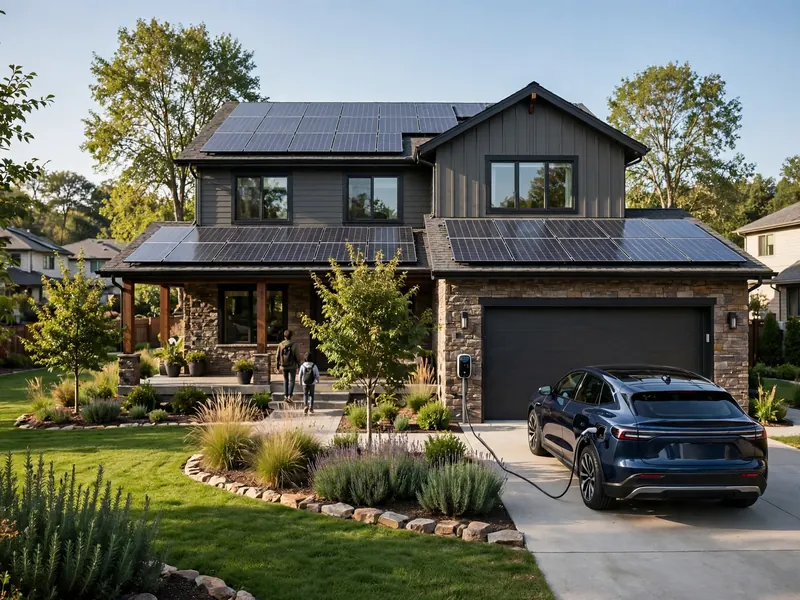
The count depends heavily on panel size. Many older calculators and guides still assume 400 watt panels, but current residential datasheets run from about 405 to 475 watts. For the Atlanta home needing 7.49 kW:
| Panel wattage | Panels needed | Actual system size | Roof area |
|---|---|---|---|
| 405 W | 19 | 7.70 kW | about 400 sq ft |
| 430 W | 18 | 7.74 kW | about 387 sq ft |
| 440 W | 18 | 7.92 kW | about 387 sq ft |
| 475 W | 16 | 7.60 kW | about 350 sq ft |
Higher wattage panels are usually physically larger as well, so they save fewer square feet than the count suggests. A 475 watt panel is often 23 to 24 square feet against 21 to 22 for a 430 watt model. Compare quotes on system size in kW rather than panel count, because two installers may reach the same 7.7 kW with different numbers of panels.
Roof space: what the panels need
The calculator multiplies the panel count by 21.5 square feet, the middle of the range for current 405 to 475 watt home panels. Some older guides use 17 or 18 square feet, which fits the smaller panels of a decade ago and understates the space a modern array needs.
Panel area is not the same as usable roof area. Fire codes in most states require a clear path along the ridge and at the edges of the roof, often 18 to 36 inches wide, so firefighters can reach the roof. Vents, chimneys, skylights and shade from trees or neighboring buildings also cut usable space. As a rough planning figure, allow 20 to 30 percent more roof than the panel area alone: an array of 18 panels covering 387 square feet usually needs 465 to 500 square feet of clear, unshaded roof.
If the count does not fit, you have three options: higher wattage panels, a lower offset, or a ground mount. Our roof suitability guide covers orientation, pitch, shade and roof age in more detail.
What your panel count costs
Once you have a size, pricing it is simple. At our $3.00 per watt planning figure, the Atlanta array of 18 panels, 7.74 kW, costs about $23,220 before incentives. The Phoenix and Seattle arrays at 8.6 kW come to about $25,800.
Prices vary by state and by system size, with larger systems costing less per watt. Our solar panel cost guide breaks down the current prices and what they include. No federal credit is assumed anywhere in this calculator, because the residential clean energy credit ended for systems installed after 2025; see our page on the federal solar tax credit in 2026 for what changed.
To see how many years the system takes to pay for itself, carry the system size and price into the solar payback calculator, which adds your electricity rate and a 3 percent yearly rate rise.
Adding a battery, an EV or a heat pump
Panel count and battery size are separate questions. Panels decide how much energy you make over a year; a battery decides how much of it you can shift into the evening or keep for an outage. Adding a battery does not change the panel count unless you want to cover your full use with stored solar during outages. Our solar battery calculator sizes storage from your evening and backup loads.
New loads do change the count. An electric vehicle driven 12,000 miles a year at about 0.3 kWh per mile adds about 3,600 kWh, roughly 6 more panels in Atlanta. Our guide to pairing solar with an EV charger covers timing and sizing. A heat pump replacing gas heat can add several thousand kWh in a cold climate; the solar and heat pump savings math shows how to estimate that load before you size the array.
Accuracy and limits of the estimate
The calculator is a planning estimate, and it is usually close for a south facing roof with little shade. Known limits:
- Orientation and shade are not modeled. An east or west roof, or afternoon shade, can cut output by 10 to 25 percent.
- City data stands in for your address. Production per kW is from one city per climate; your own site can differ by several percent.
- Panel output declines by about 0.5 percent a year. After 25 years the array still makes about 89 percent of its first year output, so a system sized for exactly 100 percent today covers slightly less later.
- Weather varies. Any one year can come in 5 percent above or below the long term average.
An installer's proposal should include its own production estimate from a shade survey. If that figure differs from ours by more than 15 percent, ask why.